

Japanese Manufacturers Crowdfund a Hopping Robot to Explore the Moon
Japanese space exploration is getting a boost from an unexpected place. It is not coming from a giant aerospace firm or a government lab. It is coming from small and mid-sized factories in Higashiosaka. A group called Sohla is leading the charge. These companies build precision parts and industrial tools for a living. Now they want to send a hopping robot named Maido 2 to the Moon by around 2030.
That goal sounds bold, but this team has done something like this before. Back in 2009, they launched a small satellite called Maido 1. It orbited Earth, monitored lightning, and snapped images from space. That earlier mission proved something important.
Small manufacturers can handle complex space hardware. They do not need to sit on the sidelines while big players grab all the headlines.
A Spherical Robot Built to Hop
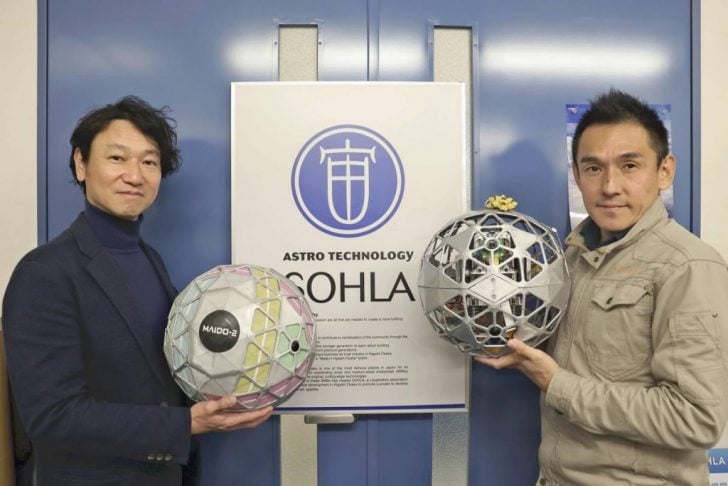
E News / Maido 2 looks different from the typical rover you see in space photos. It is a sphere with a clever leg system that allows it to hop across the lunar surface.
The robot uses springs made of shape-memory alloy. This special metal changes shape when heated and then returns to its original form. That motion stores and releases energy, which allows the robot to jump in low gravity. Hopping makes sense on the Moon. Lunar gravity is about one-sixth of Earth’s gravity, so even small bursts of force can send a robot flying several meters. Instead of dealing with wheels stuck in soft dust, Maido 2 can bounce over rough terrain.
Engineers from Karakuri, Inc. helped design the jumping mechanism. They specialize in mechanical systems, so building a compact and reliable leg structure fits right into their skill set. The team says the public reaction to the prototype gave them fresh energy to keep going.
The prototype was shown at the 2025 Osaka Kansai Expo. Visitors crowded around the display and asked sharp questions about how the robot would survive harsh lunar conditions.
Crowdfunding a Moonshot

Raff / Unsplash / Instead of relying only on government funding, Sohla launched a crowdfunding campaign. The goal is to raise ¥4 million by the end of January 2026.
The money will pay for tests that simulate space conditions, including vacuum, extreme temperatures, and violent launch vibrations.
The project had raised about 1.68 million yen. That is nearly half the target. The steady flow of support shows that the public is curious about small companies stepping into space exploration. Yasuhisa Tomita, an official at Sohla, has been clear about the mission’s deeper meaning.
The timeline aims for a lunar launch around 2030. That gives the team time to refine the design, secure partnerships, and pass strict safety and reliability tests. Space hardware cannot fail easily, so every component must survive harsh conditions.
In 2014, a British-led project called Lunar Mission One made headlines. The mission aimed to drill up to 100 meters into the lunar surface to study ancient rock.
That depth would have helped scientists learn more about the Moon’s origin and the early solar system. The project also had a public twist. Donors could buy digital memory boxes and send personal data to the Moon as part of a time capsule. The idea captured imaginations and raised over 672,000 pounds during its initial Kickstarter campaign.
More in Crowd Funding
-
`
 New Crowdfunding Campaign Aims to Bring ‘Reliable Ice’ Back to Escanaba
Escanaba residents could soon see the return of outdoor skating at Ludington Park, and this time, warm winters will not get...
May 17, 2026 -
`
 Russian Billionaires Wealth Surge Despite Sanctions, New Analysis Shows
Sanctions were meant to squeeze Russia’s elite, but the latest numbers tell a different story. According to Forbes Russia, the total...
May 10, 2026 -
`
 Americans Plan to Save Their 2026 Tax Refunds, but Most Will Stash the Cash in Low-Interest Accounts: Report
Americans are walking into the 2026 tax season with a clear goal. They want to save more money, and they see...
May 1, 2026 -
`
 “Time is the Real Flex,” and ‘Luxury Wellness’ Means Slowing Down on Purpose, Says Jonathan Boynton
The idea of luxury has changed, and Jonathan Boynton-Lee is calling it out in plain terms. In a recent interview with...
April 25, 2026 -
`
 The Decline of Startup Funding. What’s Driving It?
The Regulation Crowdfunding market just hit a rough patch, and the numbers tell a clear story. In Q1 2026, total capital...
April 19, 2026 -
`
 Wealthy Elites are Going Big to Help “De-extinct” Wildlife
For most of the 20th century, conservation followed a familiar path. Governments led the charge, backed by treaties and public funding....
April 12, 2026 -
`
 Having No Savings Is Actually More Dangerous Than Carrying Debt, Here’s Why
Most people assume debt is the worst financial position to be in. That belief feels logical because debt comes with interest,...
April 5, 2026 -
`
 5 Practical Ways to Verify GoFundMe Legitimacy
Online fundraisers help people during medical emergencies, disasters, and personal crises. Millions of donors give money every year through GoFundMe because...
March 25, 2026 -
`
 Indian Tycoon Nirmal Jain Places His Biggest Bet on the Country’s Wealth Management Boom
India’s wealth market is heating up, and billionaire investor Nirmal Jain wants a bigger share of it. The founder of IIFL...
March 19, 2026
More From Refinance Gold
-
 Prada Just Opened an 8-Floor Milan Wonderland With a Secret Underground Passage
Prada has turned its historic Milan home into something much bigger than a luxury store. The newly opened Prada Galleria stretches across...
Luxury & Life StyleOctober 10, 2026 -
 Can ‘Average’ Millennials Retire As Millionaires?
A million-dollar retirement account can sound wildly ambitious when your current 401(k) balance has only five digits. For many millennials, though,...
Top Bank AccountsSeptember 26, 2026 -
 Why the New Generation of Renters Is Ditching Homeownership and Investing in the Stock Market
For generations, buying a home marked a major step toward financial security in America. Younger Americans are starting to question that...
Investments & SavingsSeptember 19, 2026 -
 This Rare, Two-Home Oceanfront Estate in Maui Hits the Market for $45 Million
Finding a private oceanfront home on Maui already takes serious money and patience. Finding two neighboring homes that form one sprawling...
Luxury & Life StyleSeptember 12, 2026 -
 Why Genki’s Crowdfunded Genki Manta Is Its “Most Ambitious Product” Ever
Genki is taking a much bigger swing at gaming hardware with the Genki Manta, a feature-packed pro controller now seeking funding...
Crowd FundingSeptember 4, 2026
You must be logged in to post a comment Login